



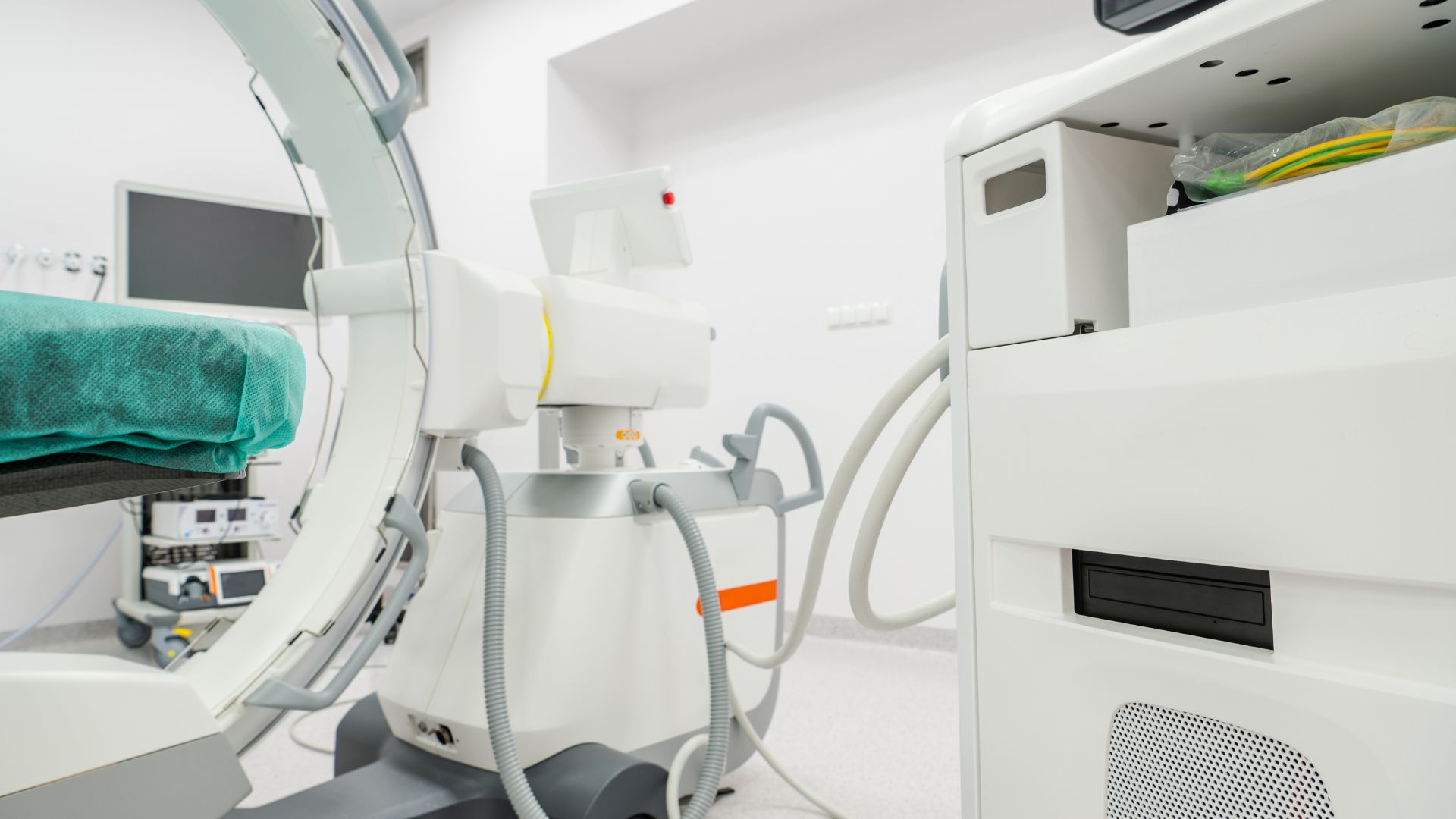
Industrial Flash Storage for Medical Hardware: Compliance, Imaging & Diagnostics
In today’s healthcare environment, system performance and regulatory compliance are tightly linked. For OEMs designing medical hardware—whether for imaging, diagnostics, or device-integrated systems—choosing the right flash storage is more than just a simple decision. It affects performance, reliability, lifecycle management, and readiness for regulatory audits. At Delkin, we specialize in industrial-grade flash storage solutions for the medical market. In this blog, we’ll examine how storage significantly influences modern healthcare hardware and what compliance and lifecycle considerations engineers need to account for.
The Role of Flash Storage in Medical Hardware, Imaging & Diagnostics
Medical systems, including imaging modalities (MRI, CT, ultrasound), diagnostic workstations, bedside monitors, portable devices, and embedded systems in medical equipment, all depend on nonvolatile storage for various functions.
- Operating system boot and application load
- High-speed logging of patient data, image frames, sensor streams
- Secure archive of image sets, diagnostic data, logs
- Support for embedded devices with long field-service life
We recognize that our industrial/OEM flash solutions are built to support the long product life cycles required by medical OEMs. Industrial flash memory has played an essential role, and is used in imaging and diagnostic tools, as well as increasingly in medical devices.
In imaging and diagnostics, performance standards are high. For example, large image files like multi-gigabyte MRI or CT datasets require quick access, and patient workflow latency is crucial. A standard HDD might take 15 seconds or more to process a 1.8 GB MRI image; flash technology can cut that down to about 0.15 seconds. In diagnostics and monitoring devices, storage often needs to log continuously, frequently with read/write workloads, in hospital or embedded environments.
Thus, the storage component is essential for achieving throughput, data integrity, lifecycle endurance, and the regulatory or compliance guarantees required in healthcare systems.
Key Compliance, Lifecycle & Engineering Considerations
Engineers specifying flash storage for medical applications must consider certain factors because they influence regulatory compliance, field reliability, and system integration.
1. Long Lifecycle & Locked-BOM
Medical OEM platforms typically have service lives of 5 to over 10 years. Unexpected changes in storage components such as controllers, NAND dies, or firmware can require re-qualification, pose unnecessary risks, and increase regulatory burdens. Delkin supports a up to a 7-year locked BOM configuration that ensures the controller, flash, and firmware stay stable throughout the device’s lifespan. Engineers should choose a storage supplier that guarantees BOM stability, provides advance notice of changes, enables last-time buys, and supplies sample units for re-qualification.
2. Environmental & Workload Endurance
While hospital environments are less harsh than, for example, aerospace settings, medical hardware still encounters challenges such as wide temperature swings in portable devices, vibration from mobile carts, power cycling, and high duty cycles in imaging systems. Flash storage should have an appropriate temperature range, endurance rating (erase/write cycles), and error management or protection features. Delkin’s product spec sheets show, for example, industrial eMMC rated from -40 °C to +85 °C and designed for embedded applications. Engineers must match the storage’s endurance and environmental ratings to the intended firmware or application workload.
3. Data Integrity, Security & Compliance
Medical hardware manages sensitive patient data and systems must adhere to standards like the Health Insurance Portability and Accountability Act (HIPAA) in the U.S. Flash storage must support secure erase, encryption, error detection and correction, power-loss resilience, and traceability. As noted in a previous Delkin Industrial blog, flash storage offers “built-in encryption that protects the integrity of sensitive data.” For OEMs, choosing storage with built-in ECC, secure erase, and supply chain traceability helps meet medical device regulatory requirements (FDA, ISO 13485) and supports internal audits.
4. Form Factor, Interface & Host Compatibility
Medical hardware encompasses various form factors such as embedded boards, removable modules, and SSDs. Flash storage must reliably interface with host systems, meet necessary capacity and speed requirements, and support customization options like pre-loaded images and formatting. Engineers should select the storage form factor (SD, microSD, SSD, eMMC, eUSB) based on the device architecture and ensure it can accommodate future capacity and performance demands.
5. Qualification, Validation & Traceability
Regulated medical devices must undergo validation and qualification of their components. Changes to storage, such as a controller revision, might necessitate requalifying the entire system. Using storage with a locked BOM, complete traceability, and detailed documentation, like batch test results and component logs, helps minimize this risk. Delkin’s onshore assembly and support, BOM control, and lifecycle management are part of their value proposition. Engineers should select suppliers who provide comprehensive documentation, revision controls, sample units, and advanced EOL notifications.
Flash Storage in Imaging, Diagnostics & Device Embedded Use-Cases
Let’s review how flash storage specifically relates to three fields of medical hardware: imaging & diagnostics, embedded medical devices, and portable/mobile systems.
Imaging & Diagnostics Systems
Imaging systems like MRI, CT, and ultrasound produce large amounts of data: high-resolution image sets, video sequences, raw sensor information, and patient logs. These systems require storage solutions that can handle big files with minimal delay, ensure reliability over many cycles, and support secure archiving options. Flash storage provides key benefits: much faster access than spinning disks, smaller size, lower power consumption, and higher dependability. For OEMs integrating these systems, choosing an industrial-grade SSD or flash module that supports high throughput, endurance, and data integrity is essential.
Embedded Medical Devices & Equipment
Devices like infusion pumps, patient monitors, diagnostic kiosks, and resuscitation equipment often depend on embedded flash for OS, firmware, logging, and patient record caching. In these applications, the storage must boot reliably, log safely, survive power cycles, and operate over a long field life. Medical-grade flash is common in imaging systems, emergency resuscitation equipment, and medication-delivery tools. Features like locked BOMs, extended lifecycle support, and supply chain traceability are especially vital in this field, as hardware may remain in service for many years.
Portable / Mobile Medical Systems
Portable ultrasound devices, mobile labs, and handheld diagnostic tools face additional challenges: small size, low power consumption, shock and vibration during transport, frequent disconnection and reconnection, and possible temperature fluctuations. Flash storage in microSD, SD, or compact SSD formats becomes essential. Engineers must ensure the storage is ruggedized, supports mobile shock and vibration profiles, and provides the performance needed for image and data capture and transfer. Delkin’s product lines (e.g., industrial microSD, microSD 3D, etc.) feature extended temperature ranges and rugged specifications.
Why Partnering with Delkin Benefits Engineers & OEMs
From an OEM/engineering standpoint, here’s how Delkin addresses the needs outlined above.
- USA-based design, assembly, and traceability: From our California facility, Delkin flash modules are assembled to order and traceable from start to finish—every component, every process, every test result.
- Locked BOM and lifecycle support: Ensuring consistent component sets, firmware stability, and predictable lifecycle for medical hardware.
- Wide product range tailored for medical and embedded use: Delkin offers various form factors and customization options (preloaded image, ruggedization, environmental screening), simplifying medical hardware integration.
- Quality and regulatory-compliant manufacturing: Emphasizing industrial-grade, controlled components and long lifecycle makes it easier to meet medical regulatory and audit requirements.
- Engineering support, customization, and low-volume flexibility: Medical OEMs often require smaller quantities, custom firmware or image loads, and seamless integration. At Delkin, we support “Low-Volume/High-Mix Versatility.”
Summary and Recommendations for Engineers
When designing medical hardware, such as high-throughput imaging systems, embedded diagnostic devices, or mobile medical platforms, flash storage is an essential component. The appropriate storage solution must meet performance, reliability, lifecycle, environmental, and compliance needs simultaneously.
Here are some actionable recommendations:
- Define your workload: Estimate image sizes, logging volumes, throughput, number of read/write cycles, and expected service life.
- Specify the appropriate form factor: Choose the right flash type (SSD, SD, microSD, eMMC, eUSB) that matches your host architecture, space and power constraints, and performance requirements.
- Ensure lifecycle stability: Require locked BOM, advance EOL notifications, and requal sample availability so your design is protected over its whole service life.
- Match environmental & reliability specs: Verify temperature range, shock/vibration resistance, power-loss protection, ECC, and secure erase/data protection features.
- Align with regulatory and data-security standards: Ensure encryption, traceability, audit documentation, and supply chain integrity comply with healthcare and medical regulations.
- Work with a partner who understands medical OEM needs: A supplier that offers customization (preloaded image, custom formatting, ruggedization), supports low-volume builds, and provides engineering support can reduce risk and development time.
At Delkin Industrial, we believe flash storage should be seen as a strategic element of your medical hardware design, not just a commodity. With proper specifications, integration, and support from your supplier, your storage will serve as a quiet enabler of performance, reliability, and compliance, rather than a source of risk.
If you’re an OEM or engineer working on medical imaging, diagnostics, or embedded medical hardware, you need flash storage that meets these stringent requirements.
Let’s connect. Delkin brings industrial-grade flash storage built for the long haul, and assembled in the U.S., with complete lifecycle control and medical-hardware-aware engineering backing.